Publications
Peer-reviewed and accepted publications.
Self-Evolving Defense: Continual Security Policy Learning for LLM Agents
I'm writing down what I was thinking while we built SED, not just what the paper claims.
One-shot agent defenses felt brittle. You harden against today's jailbreak template, the attacker changes phrasing next week, and you're back to square one unless you retrain. I didn't want a defense that only works if you own the weights.
So we treated a successful attack as evidence. After a judge scores a completed trajectory, write the failure into memory, synthesize a reusable security policy, and retrieve the relevant ones on the next episode. Memory is read mid-task and written only after the episode ends, so an attack can hurt you once and then teach the frozen agent. (rude. effective.)
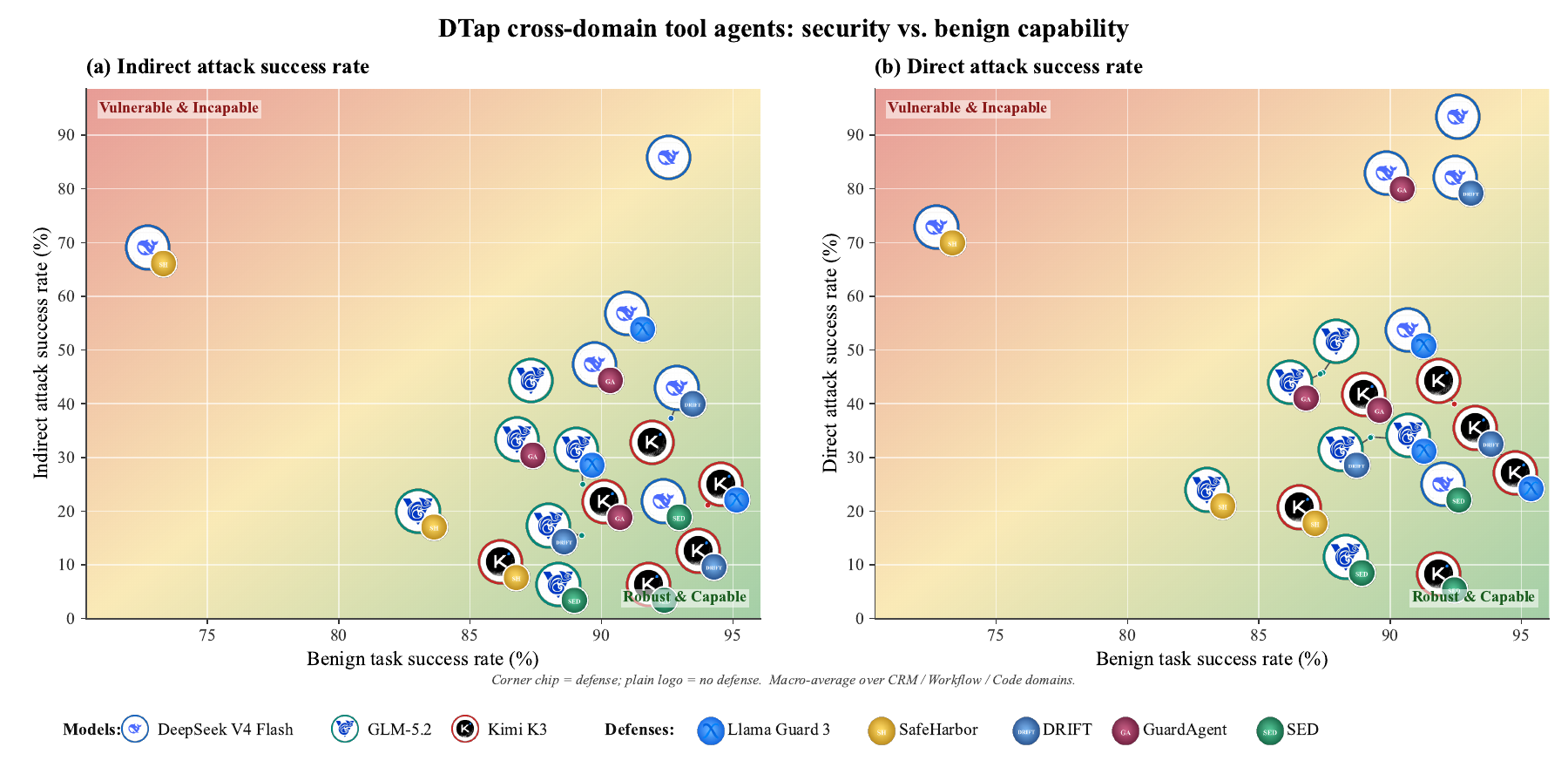
The result that stuck with me is the security/utility corner on DTap. Hover the badges below. SED sits toward high benign success and low attack success across models, which is the tradeoff I cared about while we were debugging the loop.
Macro-average indirect attack success (%) across CRM, workflow, and code
Model outer ring
Defense corner chip; no-defense shows the model only
Ideal defenses sit in the lower-right: high benign utility, low attack success. Hover a badge to zoom it; nearby points fade back.
Multi-Constraint Time Series Imputation
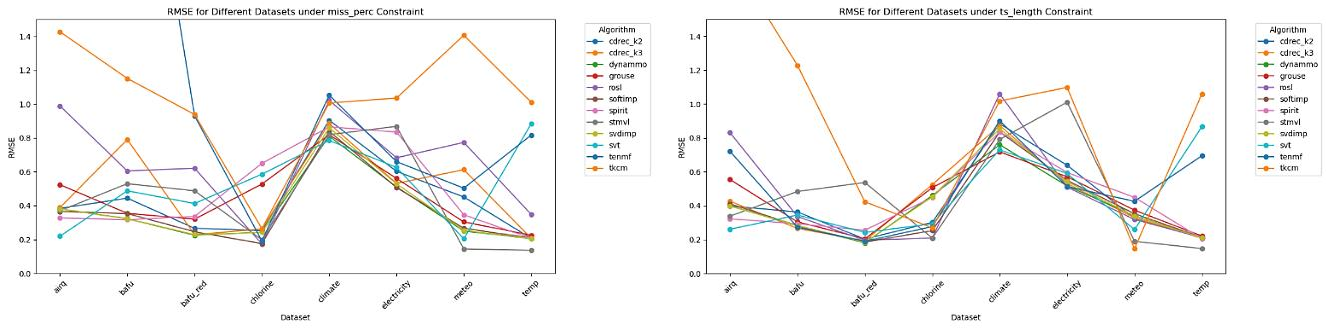
I started this paper annoyed at a pattern I kept seeing: every imputation method "won" somewhere, and the write-up quietly forgot the datasets where it lost. On real sensor logs, missingness percentage, series length, and column count all move at once.
Instead of hunting for a universal champion, I asked a narrower question: under each constraint, which algorithm is least wrong, and can you sequence those winners so each pass cleans up what the previous one couldn't? The figure below is what sold me on that framing. The lines cross constantly. No single method owns the board. (everyone wins, which means nobody does.)
On BAFU, running the three constraint-specialists in sequence dropped RMSE far below any of them alone. That's still the result I cite when someone asks why I don't just pick SoftImpute and move on.
An Intelligent Plant Disease Detection using Twin Attention Optimal CNN
I don't have a clean figure I want to lift for this one, so here's the short version of what mattered.
Early runs kept failing in a simple way: the CNN attended to healthy leaf texture and background soil because those regions dominate the pixels. Disease spots are small and easy to average away. (the model preferred dirt. fair.)
Once the attention maps lit up lesions instead of veins, the accuracy jump stopped feeling mysterious. That's the part of the paper I stand behind.