Exoplanet Detection Using ML
My first real ML project. I did not discover a planet, but I discovered a lot else.
A planet crossing its star dips the brightness by a fraction of a percent. Find the dip, find the planet. From a spreadsheet. In Bangalore. (woah.)
This was the first time I tried to do machine learning on something that was not a tutorial. Kepler objects of interest, from the NASA archive, the same table every Kaggle kernel starts from. Textbook data is clean. Kepler is not. 20%+ of the fields are missing, and the classes are wildly imbalanced. False positives outnumber planets. A model can look brilliant by predicting “not a planet” every time.
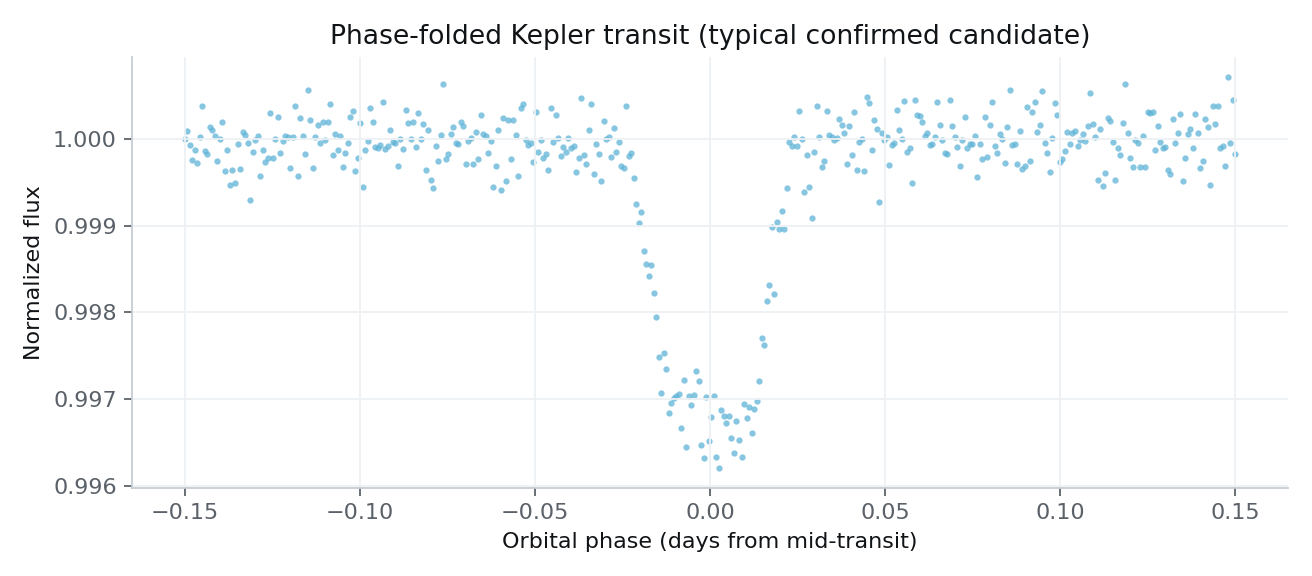
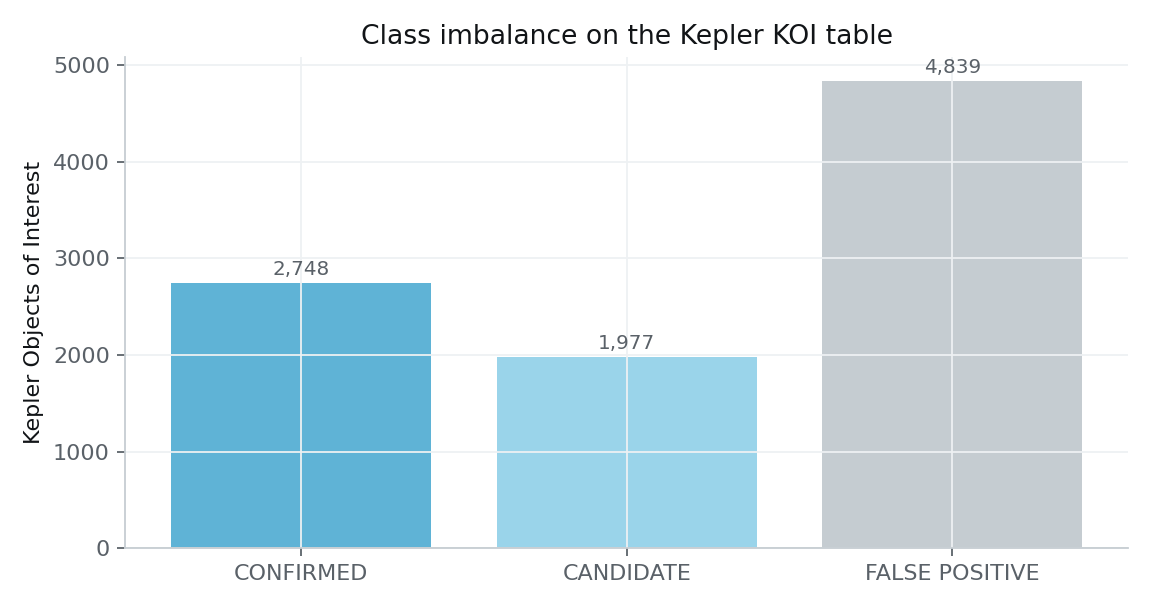
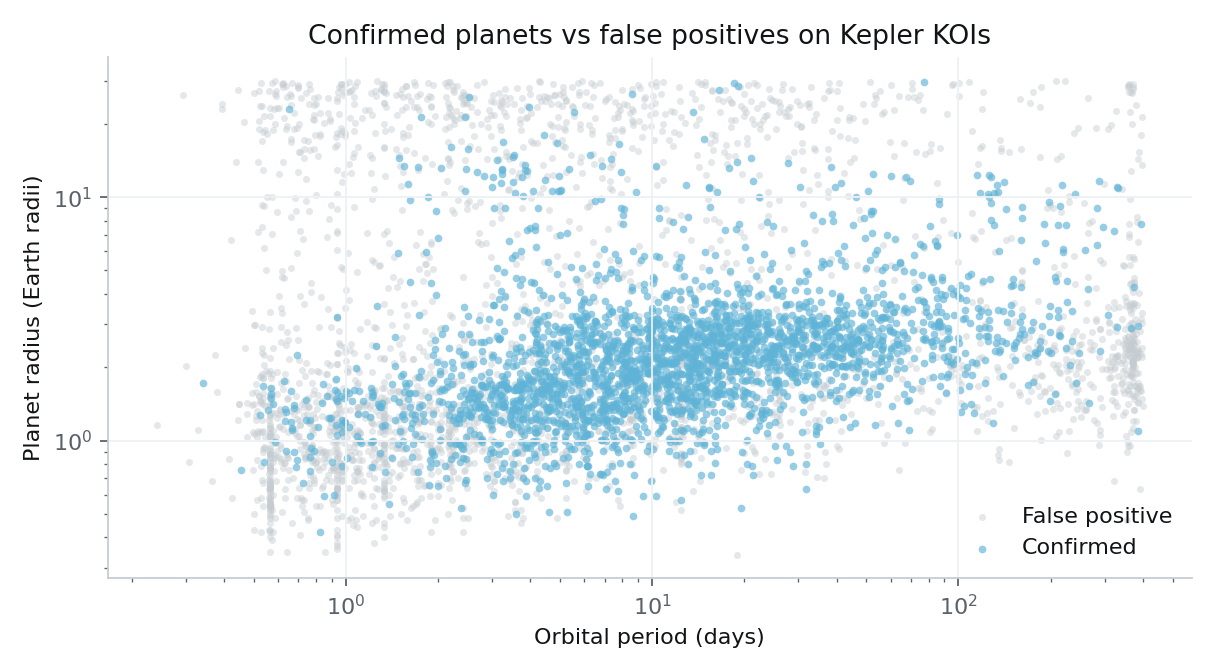
My first model hit gorgeous accuracy by saying no, every time. Technically correct. Astronomically useless. The period-radius plot is the same joke in two axes. The planets are in there. So is everything that is not a planet, sitting on top of them.
KNN and Random Forest, judged on recall instead of the accuracy number that had been lying to me. +15% on the minority class. No new planets were discovered. The ML engineer, however, was.